AI avatar quality in 2026: what actually matters
Lipsync accuracy, micro-expressions, lighting realism, and language coverage — the four levers that separate usable AI avatars from uncanny ones.

The AI avatar market matured in 2026. There are more tools, more avatars, and more languages than ever. But the gap between an avatar that lands and one that makes the viewer skip is wider than ever, too.
Here's what separates the two.
1. Lipsync accuracy
The mouth has to match the words. It sounds obvious, but it's the area where most AI avatar tools still slip — particularly on consonants like m, p, b, and f, which require visible lip closure or contact.
A good way to test a tool: write a sentence packed with those consonants, generate it, and watch in slow motion. If the lips don't close on the m in "moment," you'll feel it even at normal speed.
2. Micro-expressions
Real human faces never sit still. Eyebrows lift, eyes blink in irregular patterns, cheeks tense. AI avatars that lock the face into a single base expression read as dolls — even if the rest of the rendering is photoreal.
Look for subtle, asymmetric micro-movement across the brow, eye, and mouth area, especially during pauses between sentences.
3. Lighting realism
The avatar has to fit into its scene. A perfectly rendered face under wrong lighting still feels wrong. The best tools either render lighting per-scene or constrain you to lighting setups they handle well.
If you're cutting an avatar shot into existing brand footage, make sure your tool lets you match colour temperature and direction — otherwise you'll spend more time in post than you saved in production.
4. Language coverage
Avatars that only speak English don't go on global brand campaigns. The threshold for usable enterprise tools is around 60–80 languages with natural-sounding native speakers. Anything less and you'll hit walls on rollout.
Frequently asked questions
What's the single biggest factor in AI avatar quality?
How many languages should a usable AI avatar tool support?
Keep reading
All posts →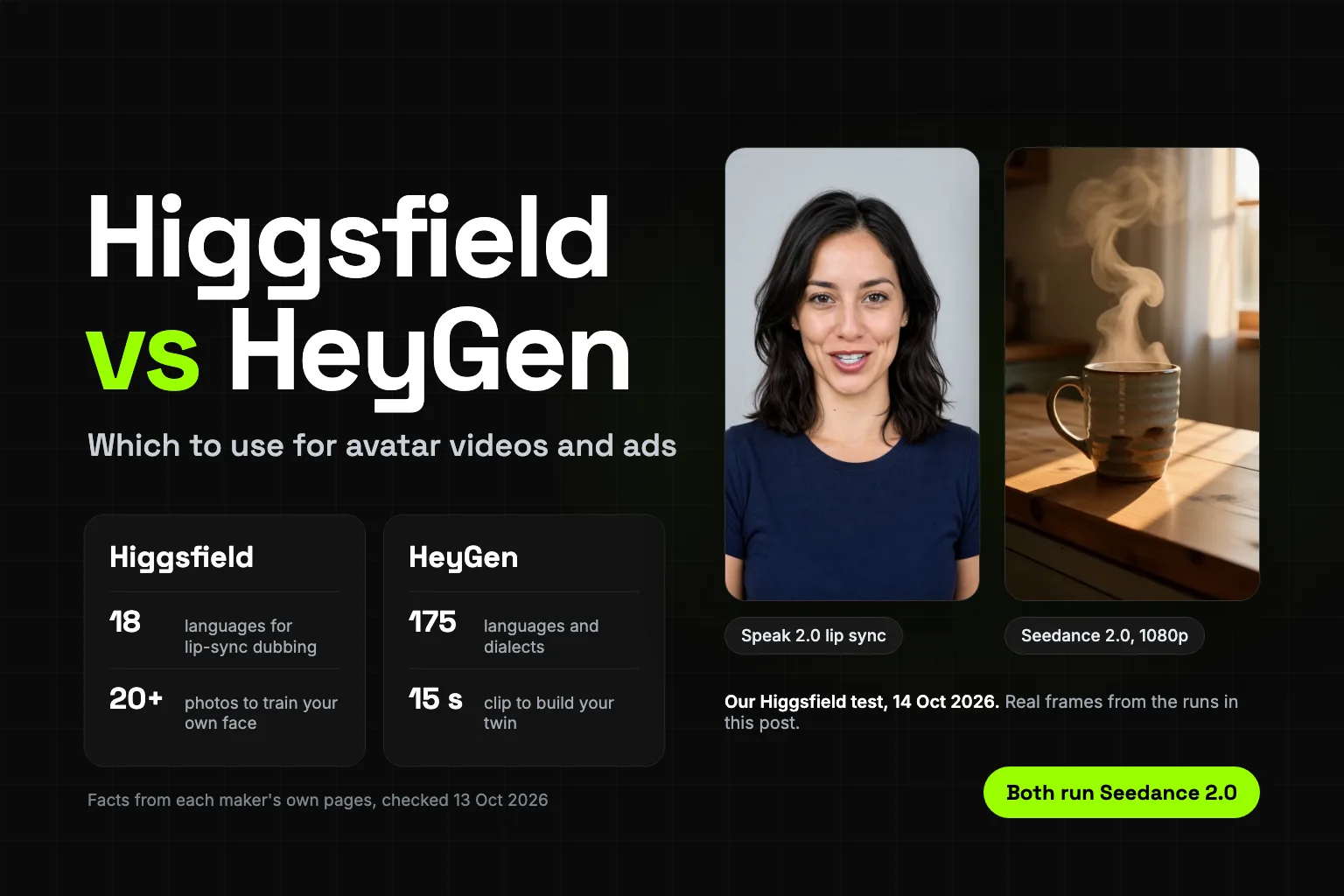
Higgsfield vs HeyGen: Which to Use for Avatar Videos and Ads
What Is an AI Video Agent? Agent vs Generator, Explained
How AI dubbing actually works — and where it still falls short