Higgsfield vs HeyGen: Which to Use for Avatar Videos and Ads
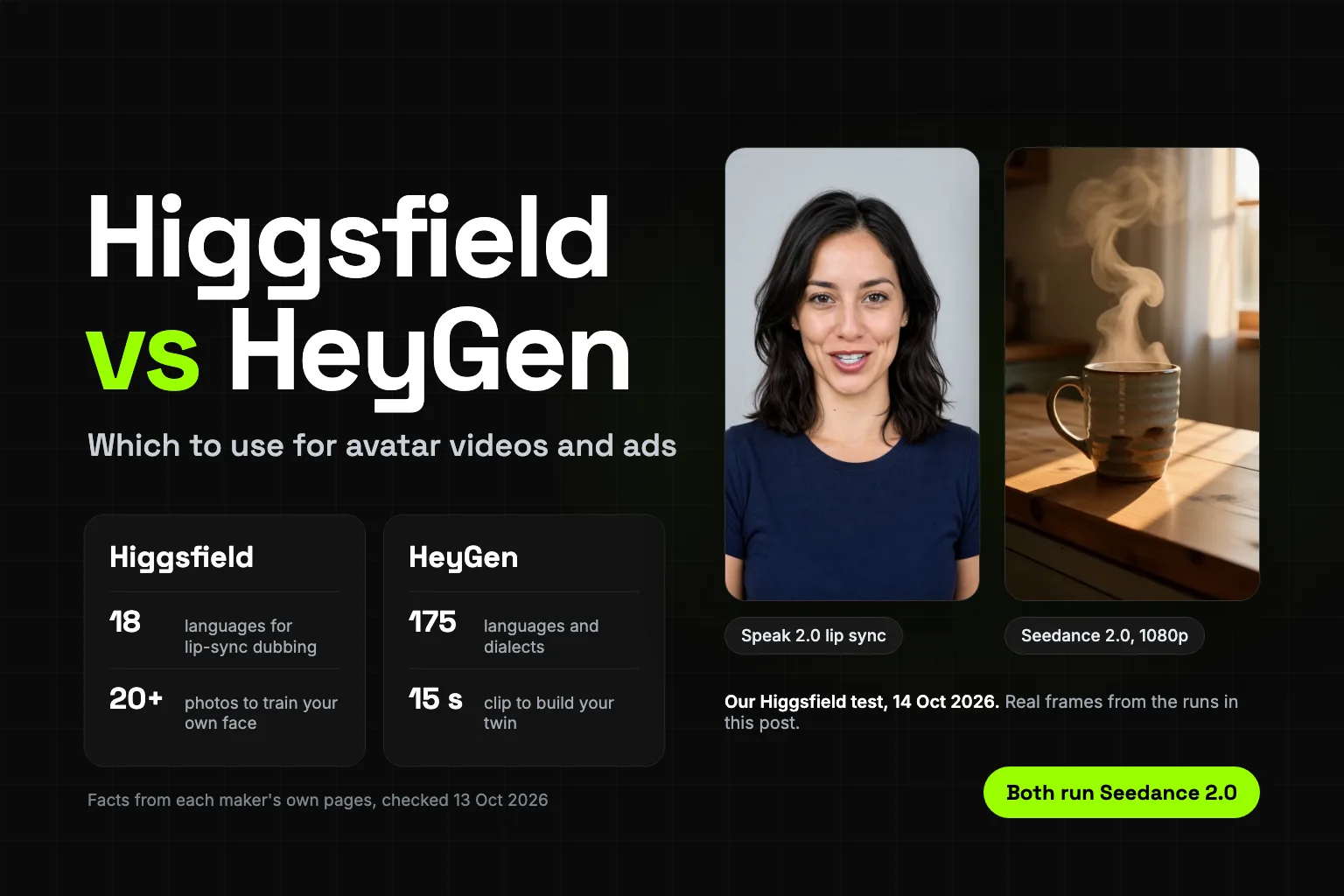
Higgsfield vs HeyGen: twins, lip sync, UGC ads, languages, length, plans and terms from each maker's pages, plus our own Higgsfield test of 14 Oct 2026.
Disclosure: Synthesys makes a competing AI video tool with AI presenters. Neither Higgsfield nor HeyGen runs inside Synthesys. This comparison uses each maker's own pricing pages, help articles and terms, checked on 13 October 2026. On 14 October we ran our four test briefs in Higgsfield; HeyGen isn't tested yet.
Higgsfield vs HeyGen is a choice of starting point. HeyGen starts from a presenter reading your script. Higgsfield starts from the shot, with its own tools on top of many outside models. Several pages ranking for this search quote older prices or credit rates, so every number below links to the maker's own page.
We've built AI presenters since 2021, so we read this pair from the presenter's side. Our short advice: decide what carries your video, a person or the shot, before you compare prices.
What is the difference between Higgsfield and HeyGen?
Higgsfield is a creative suite: outside image and video models plus its own tools for characters, cinematic shots and ads. HeyGen is an avatar video platform: digital twins, a prompt-to-video agent and lip-synced translation. Higgsfield is built around generating scenes. HeyGen is built around a person talking to camera.
- Higgsfield calls itself "an AI-native creative suite" (help). Its tools include Soul ID for a consistent face, Cinema Studio for camera control, Marketing Studio for ads and an AI Influencer builder (help).
- HeyGen leads with Avatar V, its newest avatar model, launched on 15 April 2026 (homepage). Video Agent turns one prompt into a finished video, and the translator handles 175+ languages with lip sync (translator).
How do Higgsfield and HeyGen compare on paper?
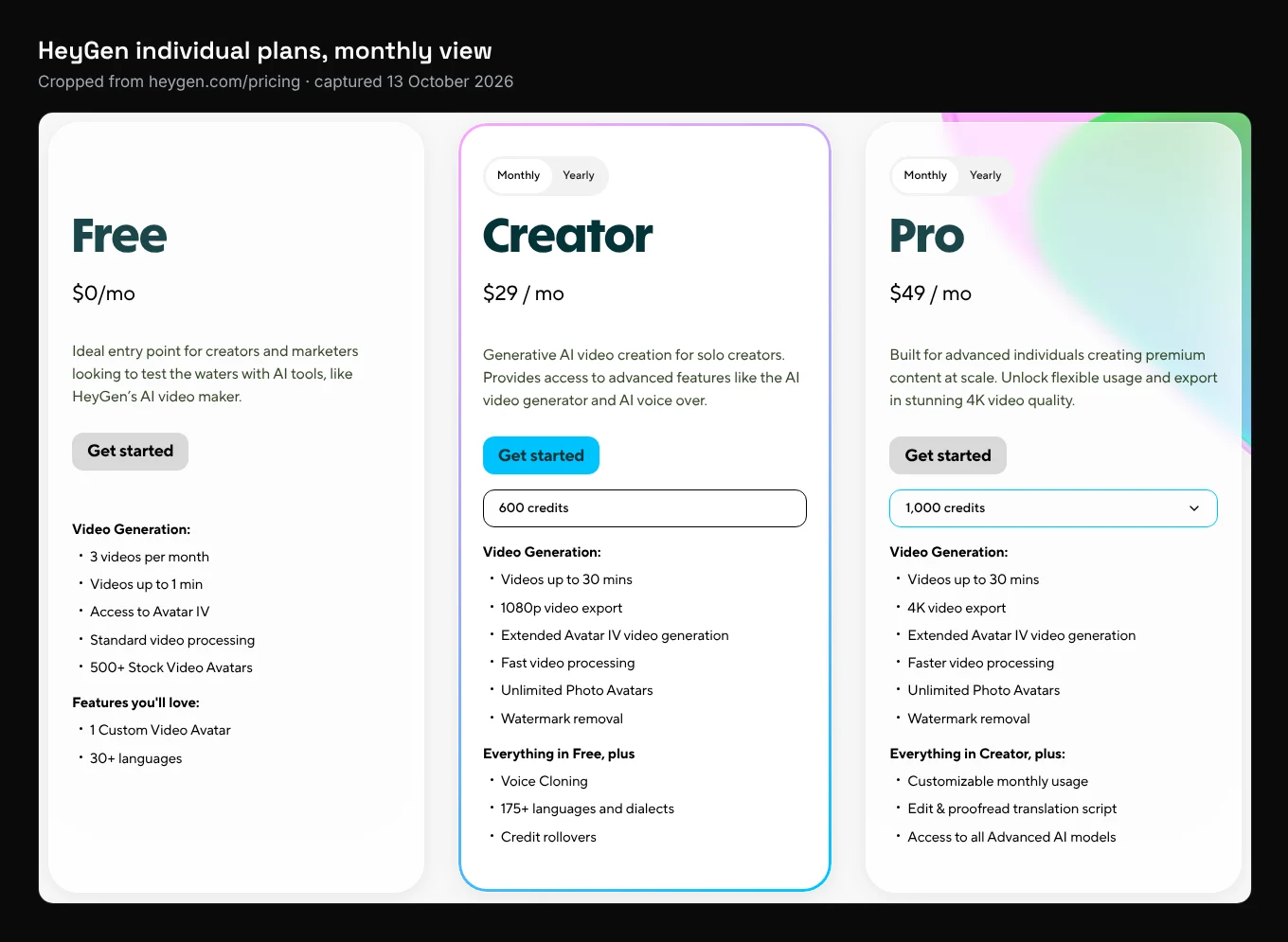
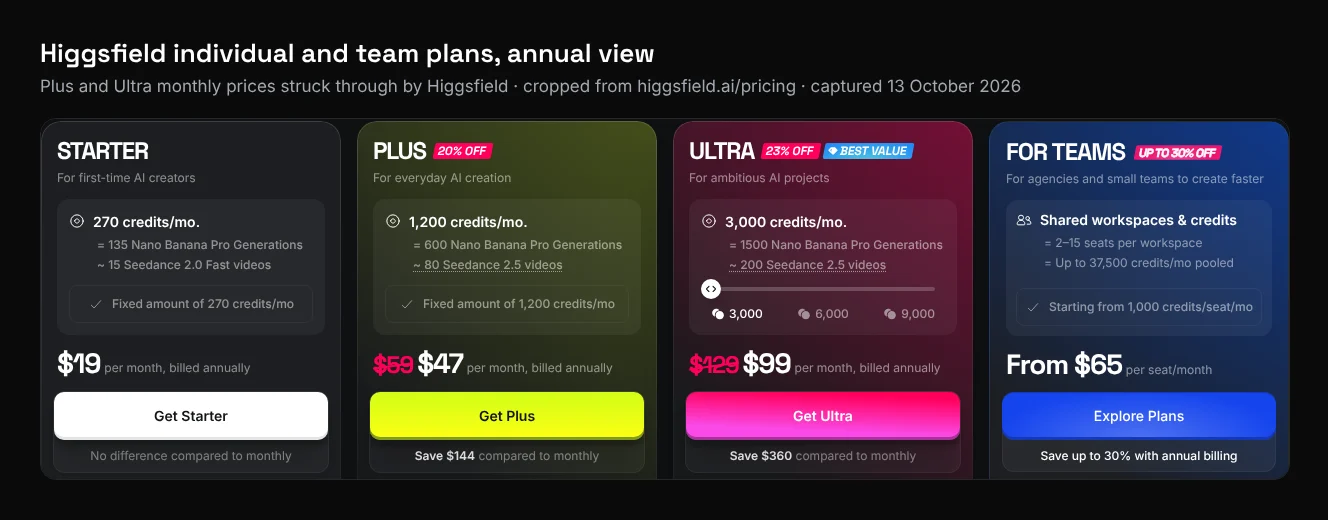
On published facts, Higgsfield is cheaper to start and lists far more generation models. HeyGen allows much longer videos, lists almost ten times as many languages and keeps unused credits for a month. Both show the credit cost before you generate, and both limit commercial use to paid plans.
| Checked 13 Oct 2026 | Higgsfield | HeyGen |
|---|---|---|
| Free plan | A small set of models, no credits, no trial (help); no commercial use (pricing) | Up to 3 videos a month, up to 1 minute each, 1 custom video avatar (pricing); non-commercial only (terms, 4) |
| Entry plan, monthly | Starter, $19: 270 credits, selected models; no Speak or UGC builder (pricing) | Creator, $29: 600 credits, videos up to 30 min, 1080p, voice cloning (pricing) |
| Next plan up | Plus, $59: 1,200 credits, all models, Speak and UGC builder (pricing) | Pro, from $49: 1,000 credits, 4K export, Seedance 2.0 (pricing, Seedance) |
| Teams | From $65 per seat a month billed annually, 2 to 15 seats (pricing) | Business, $149 a month with 1,500 credits, plus $20 per extra seat (pricing) |
| Longest single output | Marketing Studio ads: 15 s per generation in the help article (help), though the app listed 5 to 30 s in our test; Seedance 2.5: up to 30 s (help) | 30 min per video on Creator and Pro, 60 on Business, no maximum on Enterprise (pricing) |
| Your own presenter | Soul ID trained from 20 or more photos (help) | Digital twin from a 15-second video (help), plus a consent video (help) |
| Languages | Dubbing with lip sync in 18 languages (voice cloning) | 175 languages and dialects on paid plans, 30+ on Free (pricing) |
| Unused credits | Reset each billing cycle on solo plans (help) | Roll over one month on monthly plans; build up until renewal on yearly (pricing FAQ) |
| Cost before you generate | On the Generate button (help); in our test, Marketing Studio's video button showed none | Shown in the product before you generate, where available (credits) |
Billed yearly, Higgsfield Plus is $47 a month and Ultra (3,000 credits) $99, down from $129; Starter stays $19. HeyGen Creator is $24 a month billed yearly.
Which makes a better talking presenter or digital twin?
We've only tested Higgsfield so far, so this is half an answer. On paper, HeyGen is built for this: Avatar V learns your motion from a 15-second clip. Higgsfield builds a face with Soul ID, then animates it in Lipsync Studio. In our test, Speak 2.0 turned one portrait into a clean 12.5-second clip.
HeyGen asks you to film 15 seconds of yourself, then add an optional voice clone (help). The person shown records a consent video of under 30 seconds, read from HeyGen's script (help). Plans allow videos of up to 30 minutes, but the Avatar V article says that model supports videos up to 3 minutes long.
Higgsfield trains Soul ID from 20 or more photos and reuses that face across ad variations (help). Its plan table lists Higgsfield Speak 2.0, Kling Speak, InfiniteTalk and others under Lipsync Studio (pricing). Higgsfield's own blog says clip length depends on the engine, from 8 seconds to 5 minutes (blog).
Which costs less per minute of talking video?
On published rates, HeyGen. A minute of Avatar V costs 48 credits, about $2.32 on Creator. Higgsfield Speak 2.0 at 720p works out to about 168 credits a minute, about $8.26 on Plus. Higgsfield's Kling Speak engine comes closer, at about $2.95. These are different models, so this isn't a quality comparison.
| Monthly billing, checked 13 Oct 2026 | Published rate | Credits a minute | Cost a minute | Minutes from one month's credits |
|---|---|---|---|---|
| HeyGen Avatar V, Creator | 48 credits a minute (credits) | 48 | About $2.32 | 12.5 |
| HeyGen Avatar IV photo look, Creator | 16 credits a minute (credits) | 16 | About $0.77 | 37.5 |
| Higgsfield Speak 2.0 720p, Plus | About 14 credits per 5 s (pricing) | About 168 | About $8.26 | About 7 |
| Higgsfield Kling Speak 720p, Plus | About 2 credits per 2 s (pricing) | About 60 | About $2.95 | About 20 |
The arithmetic: HeyGen Creator is $29 for 600 credits, so 48 × $29 ÷ 600 = $2.32. Higgsfield Plus is $59 for 1,200 credits, so 168 × $59 ÷ 1,200 = $8.26. Higgsfield prints its rates as approximate, and HeyGen says rates can vary by account. Our own test came out higher: Speak 2.0 at its default High quality charged 56 credits for a 13-second track, about $2.75 on Plus.
Which is better for UGC and product ads?
On published features, Higgsfield packages more for short ads. Marketing Studio turns a product link or image into a UGC video, product shot or image ad. HeyGen's Video Agent builds a full video from one prompt, with a scene-by-scene preview before it renders. In our test, Marketing Studio picked the wrong product from our page.
Marketing Studio starts from 1,500+ templates. It reads your product page, fills the template with your brand assets and returns the ad in one click (help). In its UGC Videos category, it can rebuild the structure of a reference ad you're allowed to use. Results are regenerated rather than edited, except for posters. The help article caps each generation at 15 seconds; on 14 October the app's model menu listed 5 to 30 seconds and defaulted to 20.
HeyGen's Video Agent previews the video before you render and lets you refine it in chat (Video Agent). Motion elements stay editable in its AI Studio after generation (homepage). Video Agent costs 40 credits a minute, or 120 in Seedance mode (credits).
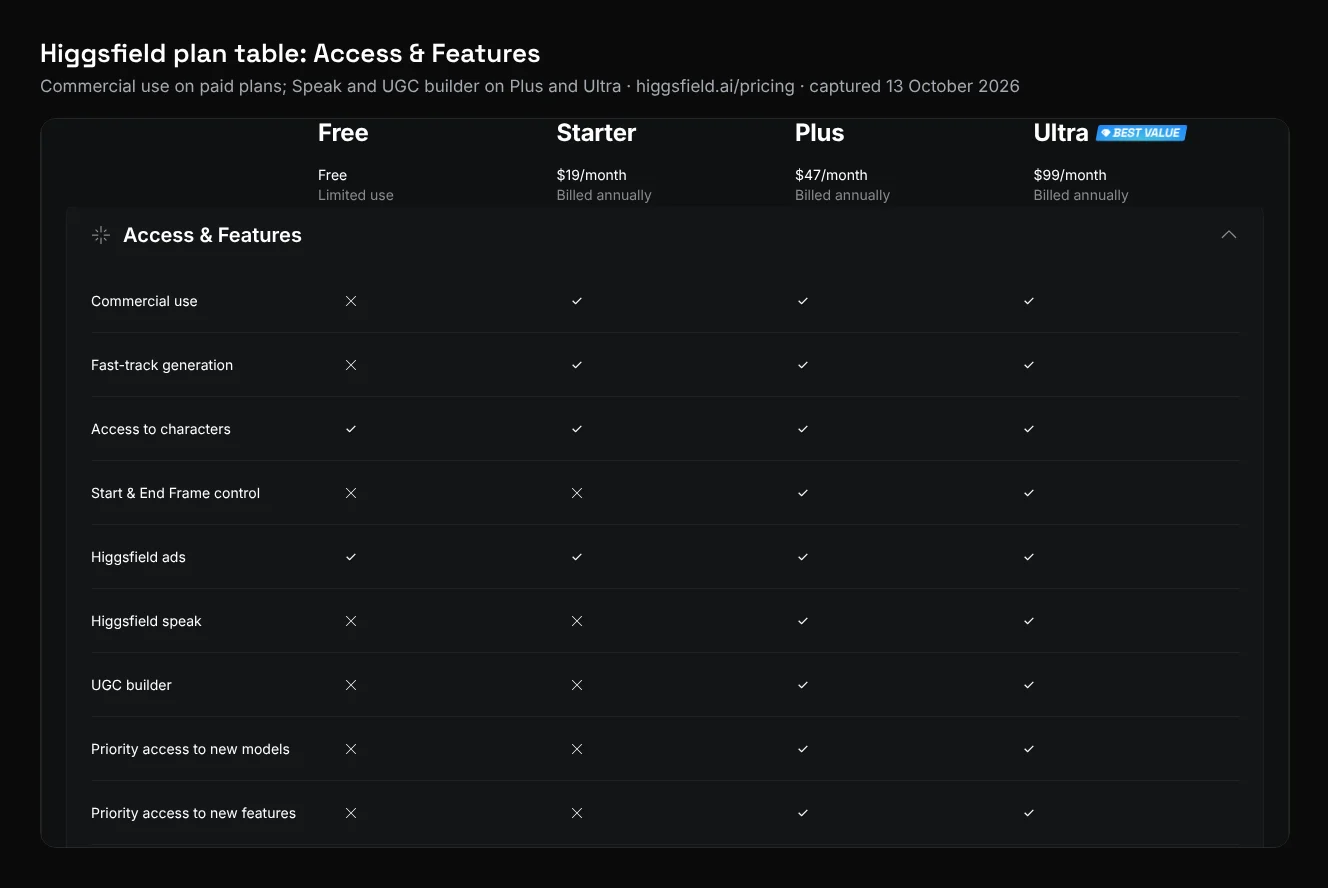
For ads, the free plans won't do. HeyGen's Free plan output can't be used for advertising or client work (terms, 4). Higgsfield's plan table lists commercial use on paid plans only (pricing).
Which handles translation and more languages?
HeyGen, by a wide margin on published numbers. It lists 175 languages and dialects on paid plans, with lip-synced translation of existing videos. Higgsfield's voice cloning page lists dubbing with lip sync in 18 languages, plus speech translation into English, Spanish or French in Supercomputer.
HeyGen's translation costs 6 credits a minute with lip sync in Speed mode, 10 in Precision mode and 4 without lip sync (credits). Pro adds a step to edit and proofread the translated script (pricing). Higgsfield's route also includes generating a new take with Seedance, which produces lip sync in several languages (help). In our test, the Translate menu in Higgsfield Audio listed the same 18 languages.
Can both make generated scenes and B-roll?
Yes, but Higgsfield has far more range. Its price list runs from Seedance and Kling to Veo, Wan and MiniMax, plus its own Cinema Studio. HeyGen runs Seedance 2.0 and Veo 3 for scenes and B-roll around your avatar. Neither entry plan gets full Seedance 2.0 today.
HeyGen charges 60 credits for a 720p Seedance 2.0 clip and 150 for 1080p, whatever its length (credits). It needs Pro or higher, though Creator plans bought by 17 August 2026 keep access (Seedance). Higgsfield charges about 45 credits per 5 seconds at 1080p, and Starter gets only the Fast and Mini versions (pricing). Seedance 2.0 runs 4 to 15 seconds on Higgsfield (help). Our 5-second 1080p shot cost 60 credits with the default settings, sound on and High bitrate.
What do the terms say about commercial use, training and consent?
On paid plans, neither claims your outputs or restricts commercial use. Both also give the company a licence to use your content to train its AI models. Higgsfield exempts customers on an Enterprise Agreement. HeyGen checks consent with a video; Higgsfield's terms put that duty on you.
HeyGen's terms were last updated on 23 July 2026 (terms). Its licence covers using your content "to train or otherwise improve or modify" its models, and is irrevocable. Higgsfield's terms were last updated on 26 July 2026 (terms, 4.4). Deleting your content stops future training use. Section 5.3 says you must hold every consent for a face or voice you upload.
Where is Higgsfield better?
- Range of models. Seedance, Kling, Veo, Wan, MiniMax and its own Soul and Cinema Studio on one plan.
- Short ads from a link. 1,500+ Marketing Studio templates, from a product page or image.
- AI characters. The AI Influencer builder and Soul ID keep an invented face consistent.
- A cheaper start. $19 a month for Starter, though Speak needs Plus.
Where is HeyGen better?
- A presenter who talks for minutes. Videos up to 30 minutes on Creator, 60 on Business.
- A twin from little footage. Avatar V learns from a 15-second clip.
- Languages. 175 languages and dialects, with lip-synced translation at 6 to 10 credits a minute.
- Cost per talking minute. About $2.32 for Avatar V on Creator, by the arithmetic above.
- Credits that carry over. One month on monthly plans, and until renewal on yearly ones.
Which would we pick, and for what?
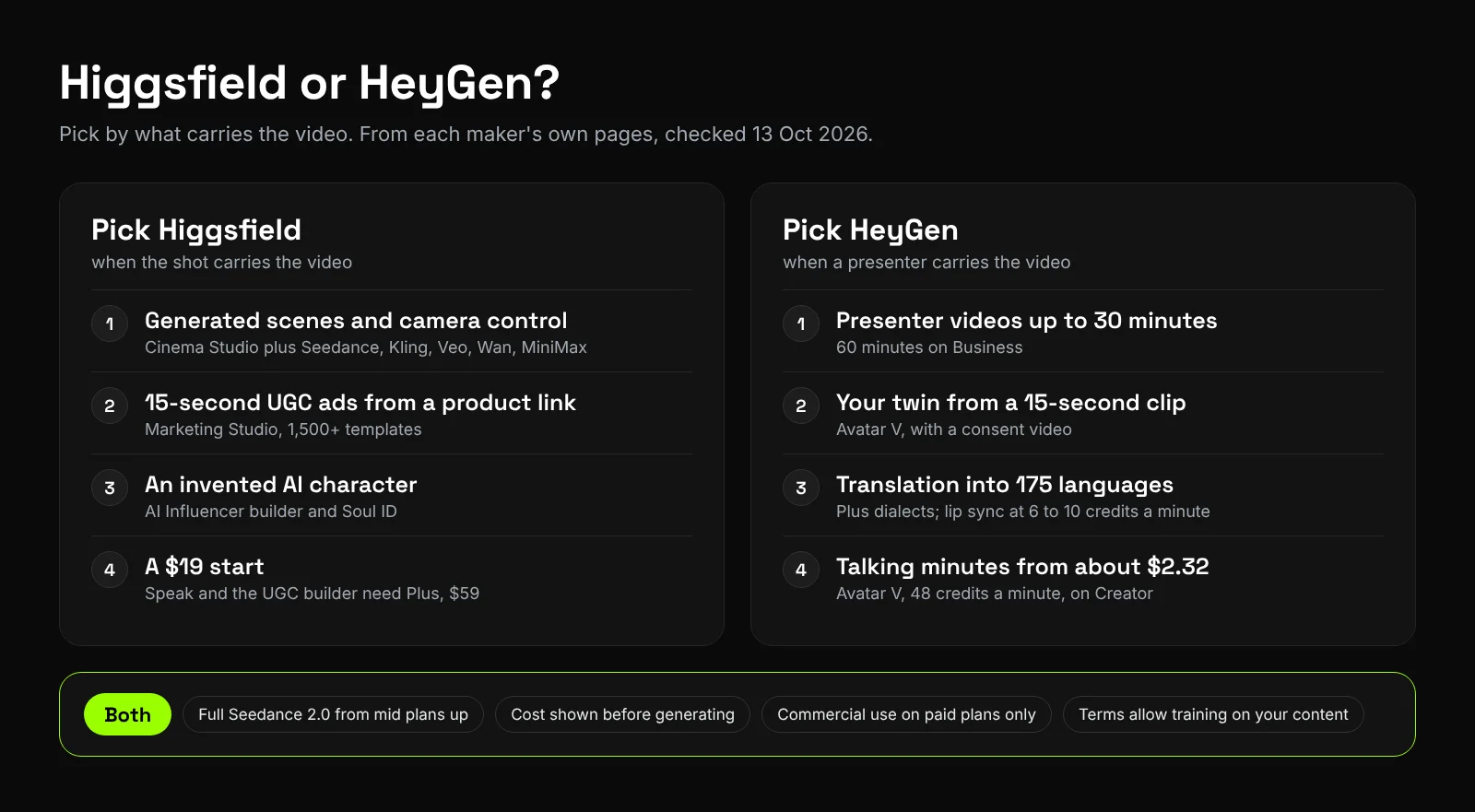
For a person talking to camera for more than a few seconds, we'd pick HeyGen. For short product ads, AI characters and generated scenes, we'd pick Higgsfield. Neither is better at everything, and we've only tested Higgsfield so far, so this is mostly about what each one is built for.
- A founder's weekly update: HeyGen. Film a twin once, then send a new script each week.
- 15-second UGC ad tests: Higgsfield. Marketing Studio starts from your product page and is built for many variations. Check which product it imports from your page before you generate.
- A course in five languages: HeyGen. Long videos plus lip-synced translation in 175 languages and dialects.
- An AI influencer or brand character: Higgsfield. The AI Influencer builder and Soul ID keep an invented face consistent.
In one line each: Higgsfield does range better, with dozens of image and video models on one plan and camera control in Cinema Studio. HeyGen does the presenter better on paper, with a twin, long videos and translation in one workflow.
Where does Synthesys fit?
Synthesys is an AI video agent that replaces traditional video production end to end. It covers part of each job: a presenter can carry the video, including your twin, and the agent can start from a product page. You can approve a script and storyboard, with the credit cost shown, before anything renders.
Here's how the jobs in this post look in Synthesys, from our AI video agent page:
| Job | In Synthesys |
|---|---|
| A presenter to camera | Pick one from the character library, describe a custom one, or film one short clip for your digital twin. Pair it with 400+ voices or your own clone |
| An ad from a product link | Paste a product page, App Store listing or website URL, and the agent builds the ad from its photos, price and copy |
| Another language | Say "make it German", and the voice, captions and on-screen details localize together, in 140+ languages |
| Length and shape | About 10 seconds to 30 minutes, depending on the format, in 9:16, 16:9 or 1:1 |
| Cost before you render | Planning is free, and the credit cost is on the approve button. In confirm mode, nothing renders until you approve |
| Changes after the render | Trim, reorder, re-voice, translate or restyle by chat, with 32 looks to choose from |
| Rights | Full commercial rights |
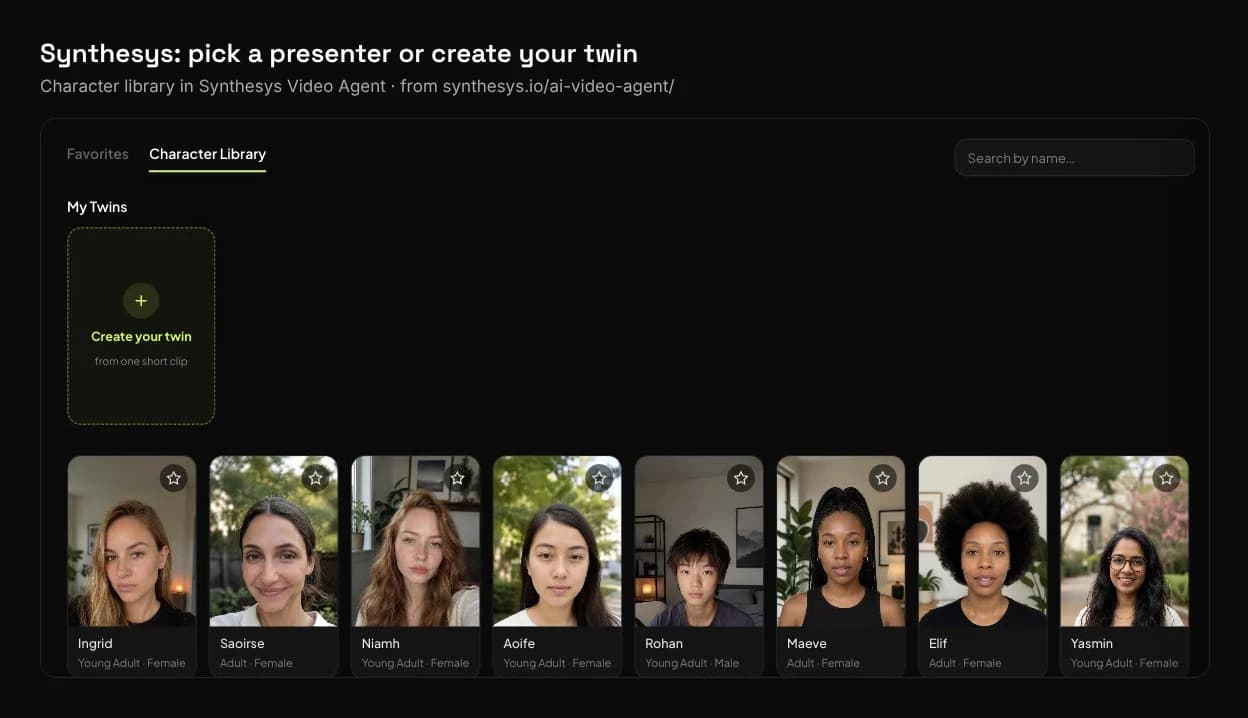
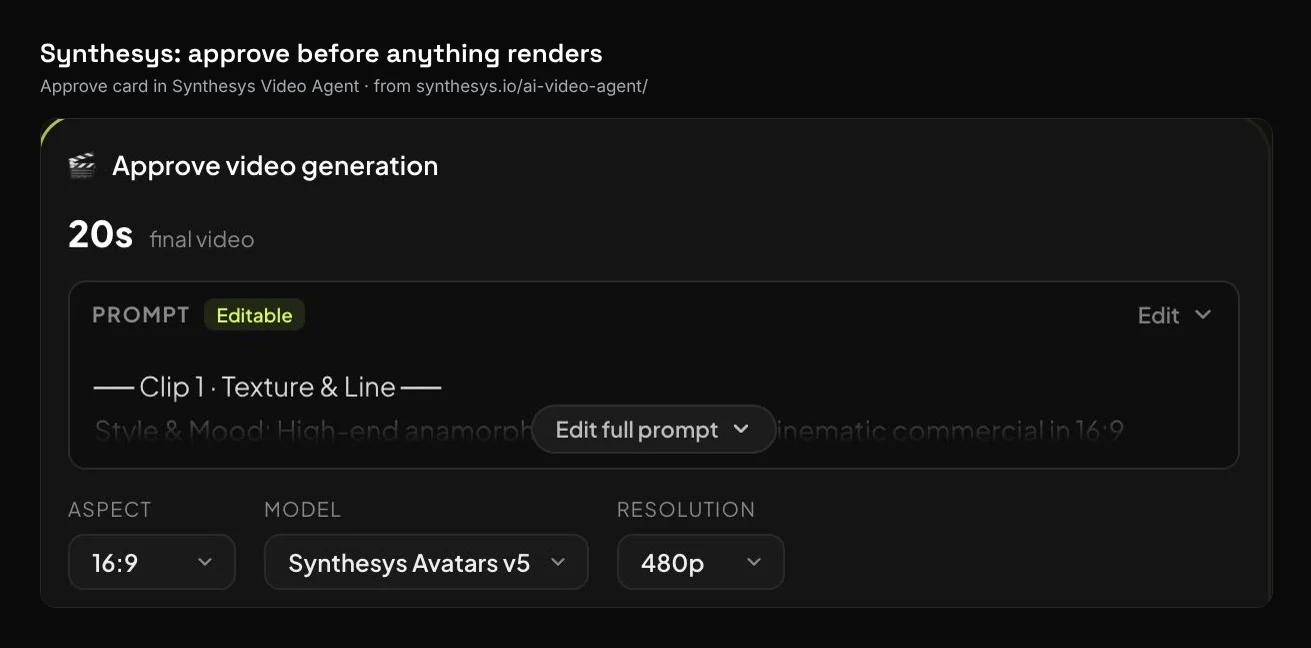
A real one: on 14 October 2026 we pasted our own AI video agent page into Synthesys and asked for a 15-second UGC-style ad. Our first two renders each took under 11 minutes and ran about 20 seconds. In both, the presenter's lips drifted from the voice, and both ended on an end card from another brand kit in our account.
For the third, we gave the agent a short brief with the same link and used Seedance 2.0 Fast at 720p. In the 15-second result below, the lips stay in sync and the lines stick to facts on the page. One flaw: the app name on the monitor behind the presenter came out garbled, which in our experience full Seedance 2.0 rarely does.
Where we think Synthesys fits: you want a finished video with a presenter, voice, captions and music, not one clip or one talking head. Where it doesn't: you need Avatar V itself, Higgsfield's Soul or Cinema Studio, or HeyGen's 175 languages. For SCORM export to an LMS, HeyGen Business lists it (pricing) and our product pages don't.
See the AI avatar video generator · Try Synthesys · See plans · What is an AI video agent?
For AI actors in UGC-style ads, see Arcads vs Creatify vs MakeUGC.
What happened when we tested Higgsfield?
On 14 October 2026 we ran all four briefs in Higgsfield on the Plus plan. Every run finished on the first try, with no failures, for 267.05 credits in total, about $13 at Plus rates. The weak spot was the ad: Marketing Studio built it around the wrong product. HeyGen isn't tested yet.
We kept each tool's default settings, set 9:16 where offered and rendered each prompt once. We checked the pages every few minutes, so the times are ranges.
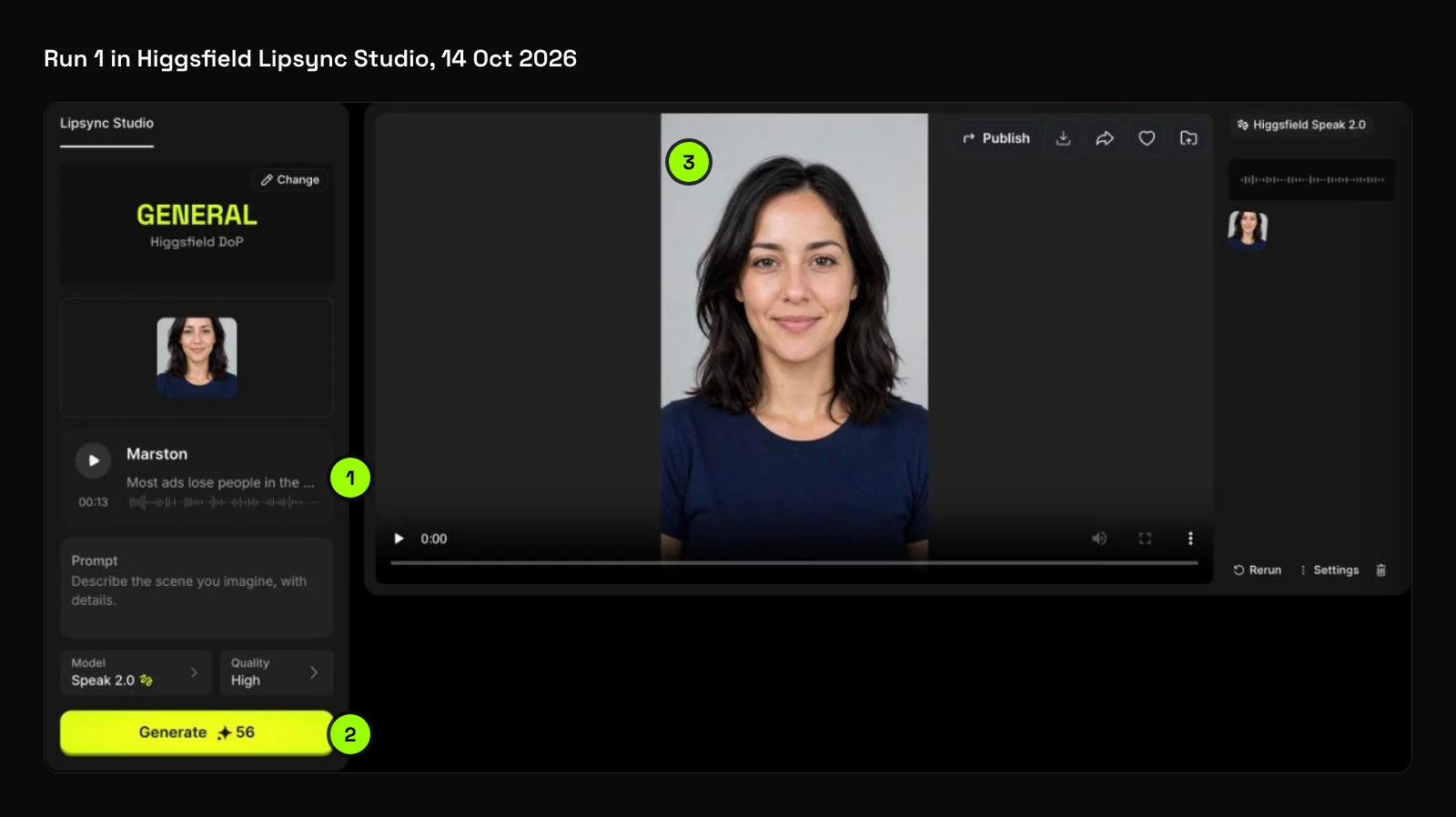
- A presenter from one portrait: we made one AI portrait in Higgsfield with GPT Image 2. Lipsync Studio then animated it with Speak 2.0 and the default voice. Script: "Most ads lose people in the first three seconds. Here's how we fixed ours: lead with the problem, show the product by second five, and end on one clear ask."
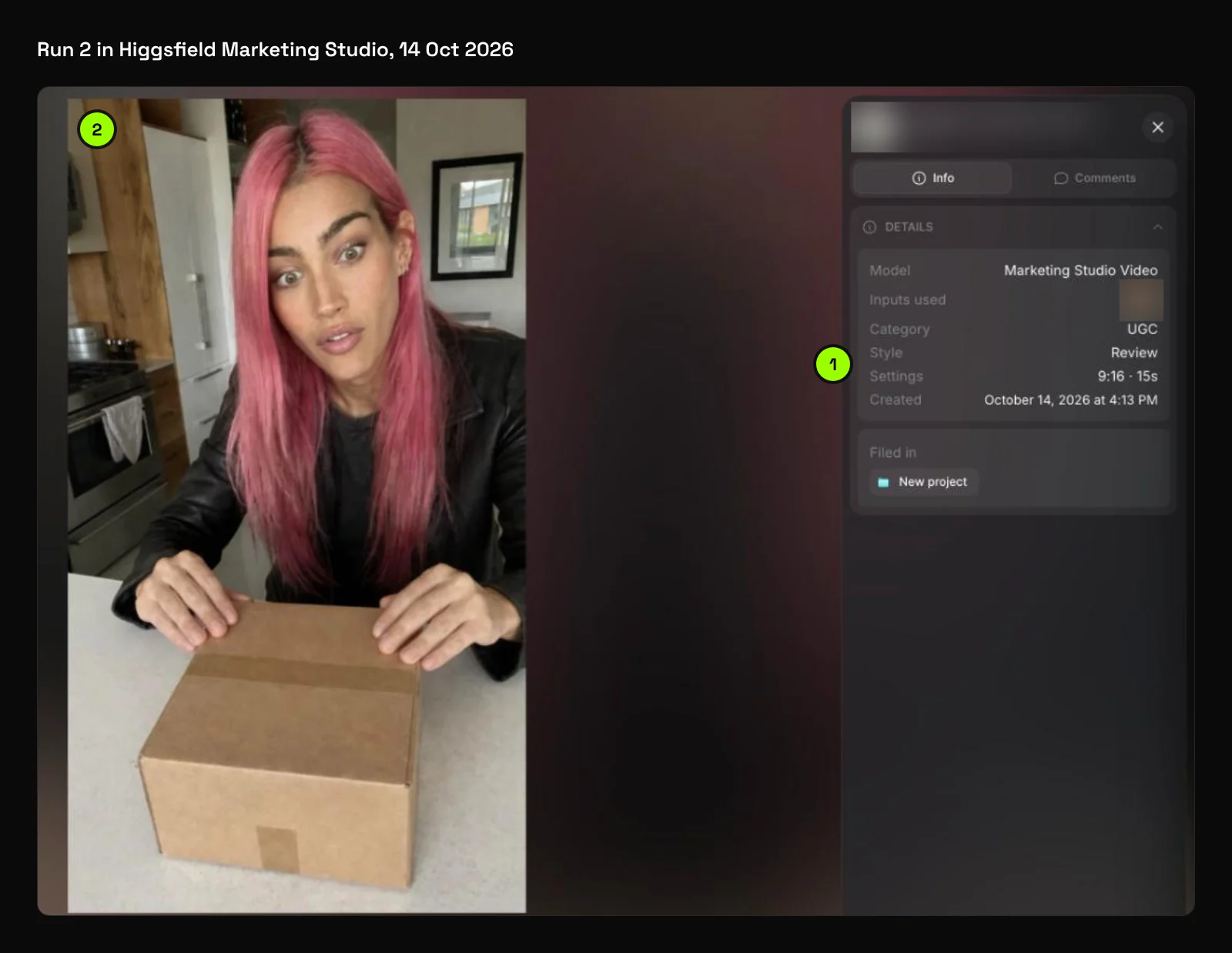
- A 15-second UGC ad from a page we own: Marketing Studio, UGC category, 9:16, 15 seconds, from our AI video agent page. Prompt: "15-second 9:16 UGC-style ad for this product, one presenter, hook in the first two seconds." The style menu had no Talking Head option, so we picked Review, the closest talking-to-camera style.
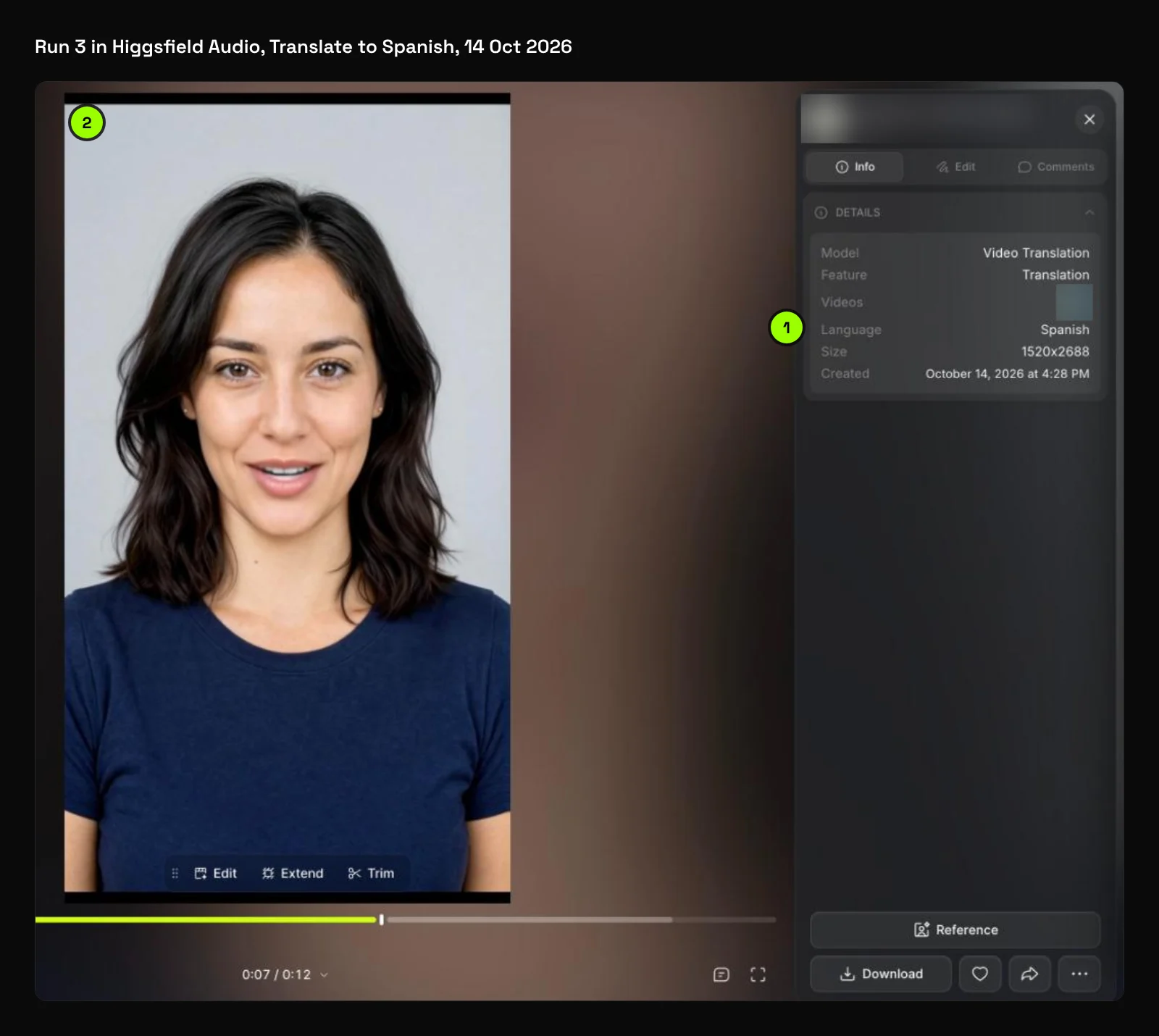
- The run 1 video in Spanish: Higgsfield Audio, Translate, Spanish. It lip-syncs by default, with no switch to turn it on or off.
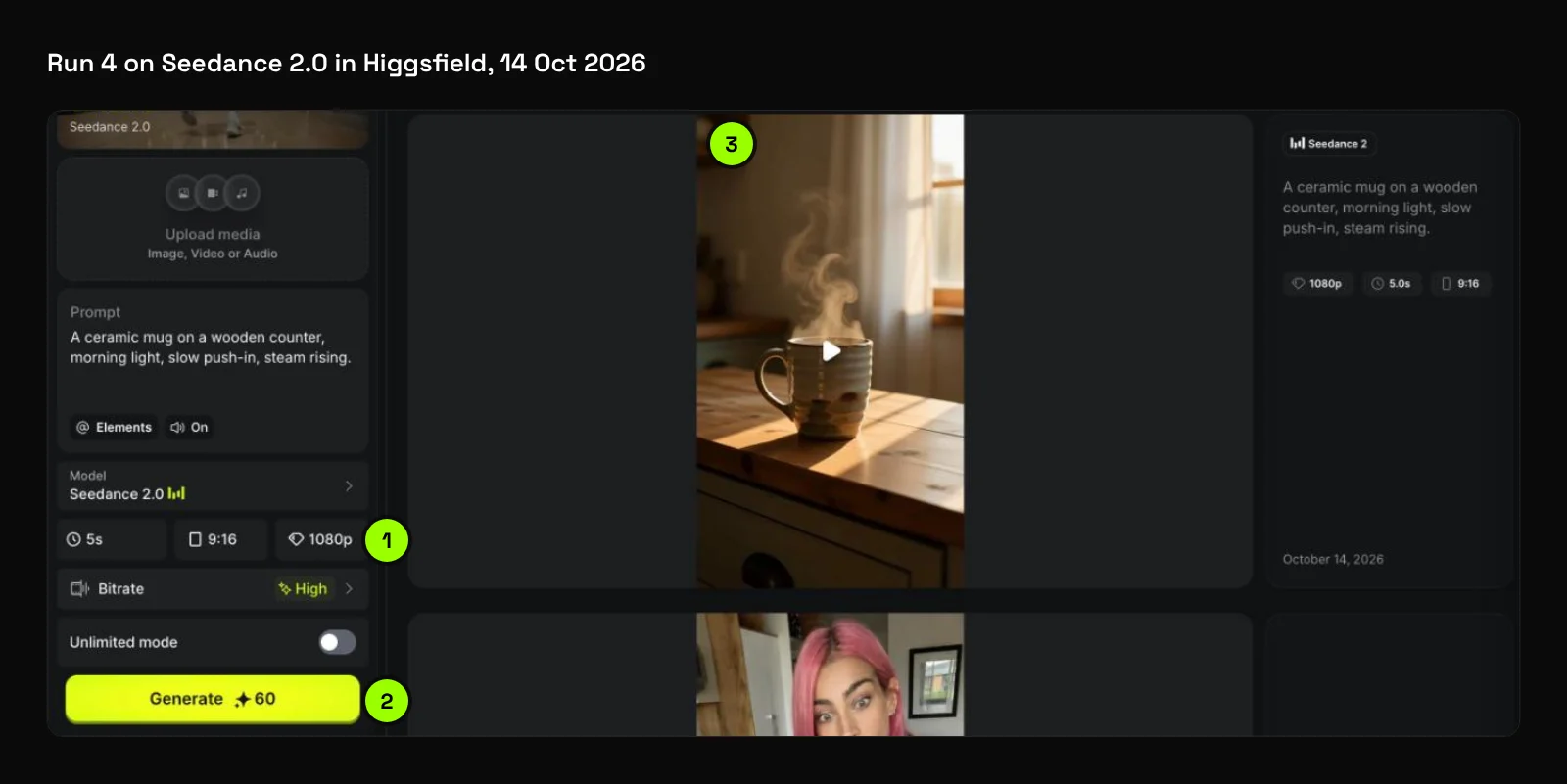
- One B-roll shot: Seedance 2.0 at 1080p, 5 seconds: "A ceramic mug on a wooden counter, morning light, slow push-in, steam rising."
| Run, 14 Oct 2026 | Credits charged | Time to result | Output | What looked off |
|---|---|---|---|---|
| Portrait, GPT Image 2 at 2K | 6.5 | About 1 min | 1520 × 2688 image | Nothing we spotted |
| 1. Speech for run 1, default voice | 1 | The spinner never cleared; the track was there after a page reload, about 7 min in | 13-second track | The default voice is male, and our portrait is a woman |
| 1. Lip sync, Speak 2.0, High quality | 56 | 13 to 16 min | 12.5 s, 704 × 1280, 16 fps | The male voice on a female face. Thin black bars at the top and bottom of the frame. Lips and teeth looked clean in the frames we checked |
| 2. UGC ad, Marketing Studio | 107.55, not shown before we clicked Generate | 4 to 8 min | 15 s, 720 × 1280 | An ad for another brand's coffee capsules, not for Synthesys. Garbled small print on the box |
| 3. Spanish dub | 36 | 2 to 4 min | 12.5 s, 704 × 1280 | Correct Spanish at the same length, still in the male voice |
| 4. Seedance 2.0, 1080p, 5 s | 60 | 2 to 5 min | 5 s, 1080 × 1920, with sound | Nothing we spotted |
| Total | 267.05 | No failed runs and no retries |
Run 1. A speech-to-text check of the clip matched the script word for word. Lips and teeth held up in the frames we checked. The catch was the voice: Lipsync Studio's default is a middle-aged male voice. Pick a voice that fits your presenter before you render.
Run 2. Marketing Studio read our page but imported the wrong product: a box of coffee capsules from a sample storyboard there. So the 15-second ad showed a woman unboxing and reviewing those capsules, with no mention of Synthesys. The small print on the box came out garbled. The video button showed no credit cost before we clicked, and 107.55 credits came off afterwards. Check which product it imports before you generate. Given the same page, our own agent built its ad around the product itself (see above).
Run 3. The Spanish dub came back at the same 12.5 seconds, and the transcript was correct Spanish. It kept the male voice from run 1. The Translate menu listed 18 languages, the same count as Higgsfield's voice cloning page.
Run 4. The mug, the steam, the morning light and the slow push-in all matched the prompt. With the default settings, the button showed 60 credits, not the 45 we worked out from the pricing page.
We haven't tested HeyGen yet. Its Free plan output is watermarked and licensed for non-commercial use only, so it can't appear in a published comparison. Everything about HeyGen in this post comes from its own pricing, help and terms pages, checked on 13 October 2026.
Sources
All pages were opened and checked on 13 October 2026.
- Higgsfield, Pricing, plan cards and feature table
- Higgsfield, Terms of Use Agreement (last updated 26 Jul 2026)
- Higgsfield, API model list and prices
- Higgsfield, AI Voice Cloning
- Higgsfield Blog, 7 Best AI Avatar Generators for Talking Videos in 2026 (10 Aug 2026)
- Higgsfield Help, What is Higgsfield? (updated 14 Sep 2026)
- Higgsfield Help, Which Higgsfield tool should I use? (updated 1 Sep 2026)
- Higgsfield Help, How do Higgsfield plans work? (updated 14 Sep 2026)
- Higgsfield Help, What uses my credits? (updated 28 Aug 2026)
- Higgsfield Help, How do I use Marketing Studio to create video ads? (updated 1 Sep 2026)
- Higgsfield Help, How do I use Seedance? (updated 9 Sep 2026)
- HeyGen, Pricing and FAQ
- HeyGen, Homepage
- HeyGen, Terms of Service (last updated 23 Jul 2026)
- HeyGen, AI Video Translator
- HeyGen, Video Agent
- HeyGen, Seedance 2.0 on HeyGen
- HeyGen Help, How to Use Credits on HeyGen (updated 6 Oct 2026)
- HeyGen Help, Avatar V is now available on HeyGen (updated 9 Sep 2026)
- HeyGen Help, Digital Twin FAQ (updated 6 Oct 2026)
- HeyGen Help, Recording your Consent Video (23 Apr 2026)
- HeyGen Developers, Documentation index
- Synthesys, AI Video Agent